
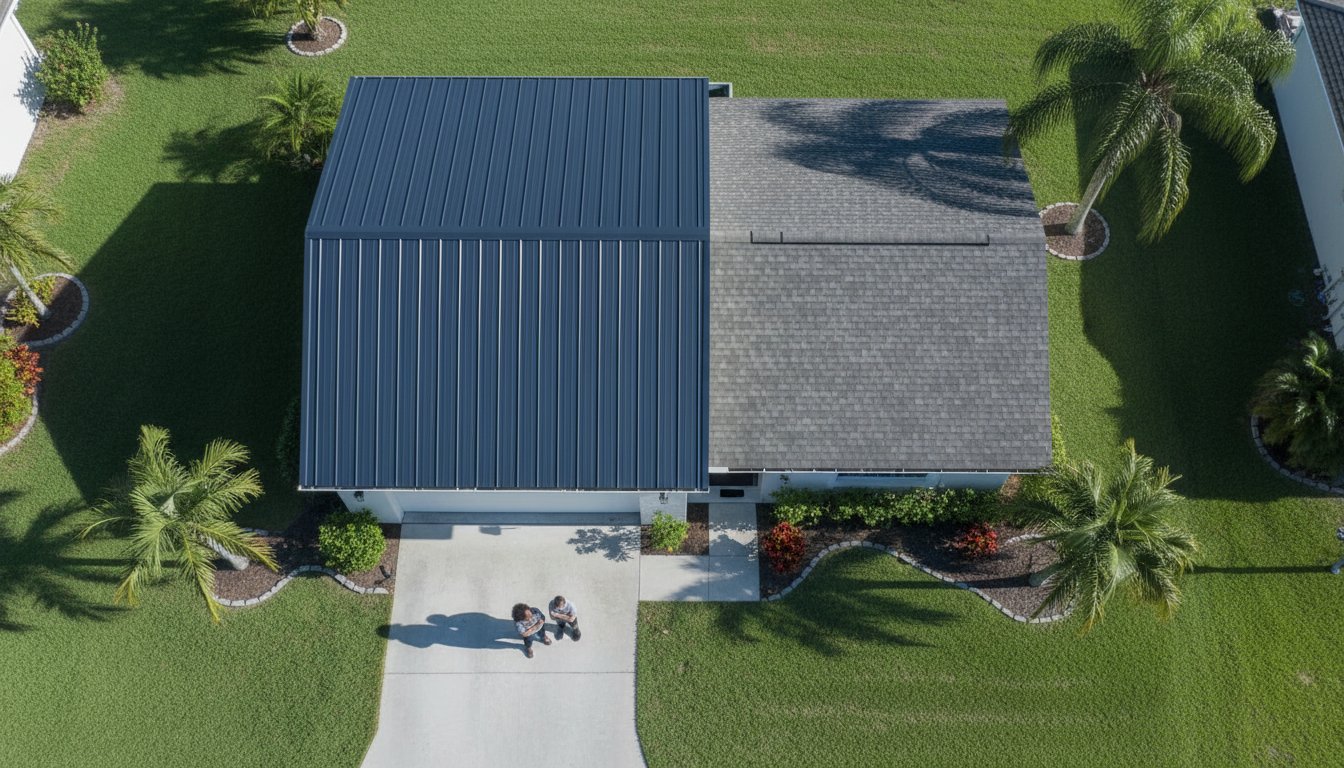
The cheapest roof you can buy in 2026 might actually be the one that costs you an extra $1,200 in insurance premiums every single year. While an initial quote for a traditional surface looks appealing, Central Florida homeowners are discovering that the true price tag is hidden in skyrocketing policy renewals and 150 mph wind risks. We know you’re feeling the pressure as you weigh the pros and cons of a metal roof vs asphalt shingles. It’s a high-stakes decision, but you deserve a fortified home that acts as a shield against intense UV exposure without draining your savings on monthly cooling bills.
We’ll break down the data so you can secure your property’s future with total confidence. Our local experts have analyzed the 30 year cost of ownership and current ROI trends specifically for our humid, storm-prone climate. You’re going to learn exactly how different materials impact your insurance eligibility, which options provide the best thermal protection, and how to maximize your home’s resale value in the current market. By the end of this guide, you’ll have a clear roadmap to a safer, more efficient home.
Key Takeaways
- Compare the long-term ROI and hurricane durability of a metal roof vs asphalt shingles to determine which material offers the best shield for your family.
- Learn how specific wind uplift ratings provide a fortified defense against 140+ mph gusts and the intense UV exposure unique to Central Florida.
- Evaluate the upfront investment against potential insurance premium savings to understand the true financial impact of your 2026 roofing project.
- Debunk common myths regarding rain noise and walk through a four-question framework designed to simplify your decision with professional clarity.
- Discover how a precision-engineered installation from a local expert ensures the lasting integrity and protection your home requires.
Metal vs. Asphalt Shingles: The Central Florida Roofing Dilemma in 2026
Choosing a new roof in Winter Haven or Lakeland isn’t just about curb appeal; it’s about structural survival. In 2026, Florida homeowners face stricter building codes and a climate that’s increasingly aggressive. Whether you’re weighing a metal roof vs asphalt shingles, your decision impacts insurance premiums and family safety for the next two decades. The 2026 Florida Building Code requires higher precision in fastening patterns, making the Expert installation of your chosen material more critical than ever. At Roof Top Experts, we act as your Reliable Guardian, ensuring every system meets our standards for long-term integrity and fortified protection.
What is an Asphalt Shingle Roof in 2026?
Modern architectural shingles aren’t the thin, flat strips used in previous decades. By 2026, these multi-layered systems are engineered to withstand 130 mph gusts, meeting the rigorous demands of Polk County wind zones. We focus on shingles with integrated algae-resistant granules to prevent the unsightly black streaks common in our high-humidity environment. While the intense UV exposure in Central Florida typically limits their functional lifespan to 15 or 18 years, they remain the top choice for 70% of Lakeland residential replacements. They offer a cost-effective, reliable barrier that balances immediate affordability with proven performance against daily summer thunderstorms.
What is a Metal Roofing System for Florida Homes?
High-performance metal systems provide a different level of security for the modern homeowner. Standing seam designs utilize hidden fasteners to eliminate potential leak points, while corrugated panels offer a robust, exposed-fastener alternative for those prioritizing strength on a budget. For homes within 15 miles of the coast, we prioritize high-grade aluminum to prevent salt-air corrosion; however, inland Lakeland properties often benefit from Galvalume steel.
Modern finishes now include “cool roof” pigments that reflect 80% of solar radiation, significantly lowering attic temperatures during our 95-degree July afternoons. When researching Metal Roof Longevity and Benefits, it’s clear why this material is gaining traction in Central Florida. It often lasts 50 years or more, providing a seamless shield that far outlasts traditional alternatives. This durability creates a permanent solution that handles the 2026 climate with ease, offering peace of mind that your home’s integrity is never in question.
Performance Under Pressure: Durability in Hurricane Zones and High UV
Central Florida’s climate is a relentless testing ground for any residential structure. Homeowners in Polk, Osceola, and Hillsborough counties face a brutal combination of 140 mph wind gusts and 300 plus days of intense UV exposure. Choosing between a metal roof vs asphalt shingles is a decision about how well your home’s primary shield will hold up over the next 20 to 50 years. While shingles are a standard choice, the unique environmental pressures of the Sunshine State often demand a more fortified solution.
Hurricane Resilience and Wind Uplift
Florida Building Code requires roofs in cities like Kissimmee and Davenport to withstand wind speeds reaching 140 mph or higher. Metal roofing systems use interlocking panels that create a continuous, fortified surface. This shield effect is significantly more secure than individual asphalt shingles, which rely on adhesive strips that can fail during sustained pressure. According to the Federal Alliance for Safe Homes, choosing the right materials can help protect your home from natural disasters by reducing the risk of total roof failure. We also install a secondary water barrier under every system; this ensures that even if the top layer is damaged by flying debris, your family stays dry.
Summer storms in Central Florida often bring 1 inch hail and falling oak branches. Metal roofs typically carry a Class 4 impact rating, which is the highest available in the industry. While asphalt shingles may crack or lose protective granules under the same stress, metal panels remain structurally sound. This precision in engineering prevents the leaks that lead to costly interior mold remediation after a typical afternoon downpour.
Heat Management and Energy Efficiency
The Florida sun is a constant threat to roof longevity. Asphalt shingles act like a thermal sponge, absorbing heat and creating an attic oven effect that lingers long after the sun sets. Metal roofs utilize high thermal emissivity and reflective coatings to bounce solar radiation away from your living space. A metal roof can reduce cooling costs by up to 25% in Lakeland summers. This efficiency doesn’t just save money; it preserves your HVAC system by reducing its daily workload. If you’re concerned about how your current roof is handling the heat, our local roofing specialists can provide a detailed assessment of your home’s thermal performance.
When comparing a metal roof vs asphalt shingles, the long term degradation from UV rays is a critical factor. Shingles eventually become brittle and curl due to oil evaporation caused by heat. Metal remains stable, maintaining its integrity and color for decades without the risk of warping or shedding materials into your gutters.

Financial Breakdown: Upfront Costs vs. Long-Term ROI in Polk County
Choosing between a metal roof vs asphalt shingles often starts with a look at the initial quote. In Polk County, you’ll find that a professional metal installation typically costs 2 to 3 times more than a traditional shingle setup. While the upfront price is higher, this investment acts as a financial shield for your Lakeland home. We view this as a strategic move to protect your equity from the volatile Florida insurance market and rising material costs.
- Initial Investment: Metal requires a larger capital outlay but offers 50 plus years of service.
- Maintenance: Shingles require frequent inspections for granular loss and seal failure after tropical storms.
- Resale Value: Homes in Winter Haven with metal roofs often see a 6% to 10% increase in appraisal value.
Calculating the 30-Year Cost of Ownership
For a 2,000 sq ft home in Lakeland, 2026 estimates put high quality architectural shingles at $12,800 to $16,500. A standing seam metal roof for that same footprint averages $34,000 to $49,000. However, Polk County homeowners face a “two roof” reality with shingles. Central Florida’s intense UV rays and 90% humidity levels often degrade asphalt within 15 to 17 years. By year 30, you’ve likely paid for two shingle roofs and two sets of labor. Metal installation requires specialized expert crews with precision tools, but the ROI is found in avoiding that second replacement cycle.
Insurance Discounts and Mitigation Credits
Your choice impacts your 2026 insurance premiums significantly. Florida’s Wind Mitigation inspection rewards the structural integrity of metal. Many local insurers offer 18% to 30% discounts on the wind portion of policies for metal installations. Currently, many Florida carriers refuse to renew policies on shingle roofs older than 15 years. They may also switch the policy to Actual Cash Value (ACV), which pays only a fraction of a claim based on the roof’s age. A fortified metal roof maintains Replacement Cost Value (RCV) for decades, ensuring your family’s financial security stays intact during hurricane season.
We’ve seen Winter Haven buyers walk away from deals because a shingle roof was 12 years old. They know the insurance struggle is coming. A metal roof removes that anxiety entirely, making your property a premium listing in the Lakeland market.
Making the Choice: 4 Questions to Ask Before You Decide
Choosing between a metal roof vs asphalt shingles requires a clear-eyed look at your long-term goals for your property in Davenport or Auburndale. Many homeowners worry that a metal roof will sound like a tin drum during a heavy Florida downpour. This is a common myth. When installed with solid decking and modern insulation, a metal roof produces only about 52 decibels of sound during rain, which is quieter than a standard conversation. We ensure your home remains a quiet sanctuary regardless of the weather outside.
Environmental impact is another critical factor. Asphalt shingles contribute to the 11 million tons of roofing waste that enters U.S. landfills annually. In contrast, metal roofing is often composed of 25% to 40% recycled content and is 100% recyclable at the end of its lifespan. If you live in a deed-restricted community in Poinciana or Lake Wales, your first step is reviewing your HOA covenants. While some older boards still mandate shingles, many are now approving metal options due to their superior wind resistance and fire safety ratings.
How Long Do You Plan to Stay in the Home?
If you intend to sell your house within the next 8 to 10 years, asphalt shingles are often the more pragmatic financial choice. However, if this is your “forever home,” metal is a legacy investment. In Polk County, the break-even point for a metal roof typically occurs between year 12 and year 15. While the upfront cost is higher, you avoid the inevitable $12,000 to $18,000 replacement cost that asphalt owners face every 15 to 20 years in our harsh climate.
Local Aesthetics and Neighborhood Norms
Your roof must complement the architectural style of Central Florida. For Mediterranean-style homes, stone-coated steel provides the look of traditional clay tile without the immense weight. For modern builds, standing seam metal offers a clean, industrial aesthetic. To prevent the intense UV rays from stripping your home’s curb appeal, we recommend Kynar 500 resin finishes. These coatings are proven to retain 90% of their color integrity even after 20 years of direct sun exposure. When presenting to an HOA, focus on the “architectural grade” labels of modern metal products to gain faster approval.
Ready to see which material fits your budget and protection needs? Contact our local experts for a free precision inspection today.
Protecting Your Investment with Florida Rooftop Experts
Choosing between a metal roof vs asphalt shingles is a major financial decision that impacts your home’s safety for the next 20 to 50 years. At Florida Rooftop Experts, we act as your Reliable Guardian. We don’t just nail down materials; we build a fortified shield designed to withstand 150 mph hurricane winds and the relentless Florida sun. Our team understands that a metal installation requires entirely different precision than a shingle replacement. Every project we touch includes a 100% commitment to licensed workmanship and professional warranties that ensure your peace of mind stays intact long after the storm passes. We treat your property like it’s our own neighborhood, because it is.
Why Homeowners in Winter Haven & Lakeland Trust Us
Since 2020, we’ve served homeowners across Polk, Hillsborough, and Osceola counties with a focus on regional durability and integrity. We maintain separate, specialized crews for Asphalt Shingle and Metal Roofing because the technical requirements for these materials are vastly different. A shingle roof needs perfect ventilation to combat 90% humidity, while a metal roof requires specific thermal expansion joints to handle 100-degree heat. Our local roots mean we’ve seen how Florida weather treats subpar work. We choose to do things right the first time, ensuring your home remains a safe haven for your family through every season.
Schedule Your Free Roof Inspection Today
Our expert consultation is more than a simple price quote. We provide a comprehensive 21-point inspection to identify hidden deck rot or structural weaknesses that others might miss. If you’re dealing with a storm damage claim, we’ll help you navigate the complex insurance process with clear, documented evidence and professional guidance. We’ll guide you through the final choice of a metal roof vs asphalt shingles based on your specific budget, aesthetic preferences, and long-term goals. Your home deserves a professional touch that prioritizes longevity over a quick sale. Don’t leave your safety to chance when the next storm clouds gather on the horizon.
Secure Your Central Florida Home for the Decades Ahead
Choosing between a metal roof vs asphalt shingles for your 2026 renovation is a decision that impacts your property value and safety for the next 50 years. While high-quality asphalt shingles provide a reliable 20 year lifespan at a lower entry price, a fortified metal system acts as a permanent shield capable of withstanding 140 mph hurricane winds. In the sweltering humidity of Polk, Hillsborough, and Osceola Counties, metal roofs reflect up to 85% of solar radiation. This thermal efficiency can slash your monthly cooling costs by 25% during the peak of the Florida summer. We know that protecting your family’s biggest investment is your top priority. As a fully licensed and insured Florida contractor, Florida Rooftop Experts brings technical precision and local mastery to every installation. We specialize in hurricane-resistant roofing that stands up to the unique environmental pressures of the Sunshine State. You don’t have to face the next storm season with uncertainty. Our team provides the steady hand and expert guidance you need to build a home that lasts.
Secure your home with a free expert roofing estimate today!
Frequently Asked Questions
Is a metal roof much louder than shingles during a Florida thunderstorm?
No, a metal roof isn’t significantly louder than shingles when installed with professional-grade underlayment and solid wood decking. Modern installation techniques use thick layers of insulation that dampen sound to levels nearly identical to traditional materials. You’ll enjoy the same peace and quiet during a 3-inch-per-hour Central Florida downpour while benefiting from a much more fortified structure that protects your family.
How much can I save on Florida home insurance with a metal roof?
You can typically save between 15% and 35% on your annual Florida homeowners insurance premiums by switching to a metal roof. These savings stem from the material’s Class A fire rating and superior wind resistance during hurricane-force gusts exceeding 140 mph. When comparing a metal roof vs asphalt shingles, insurers favor the long-term durability and reduced risk of water intrusion that metal provides.
Will a metal roof attract lightning during Central Florida’s storm season?
A metal roof doesn’t attract lightning, and it actually provides a safer shield for your home because it’s a non-combustible material. Lightning seeks the path of least resistance to the ground based on a building’s height and location rather than its surface material. If your home is struck during a typical July storm, the metal safely dissipates the electrical charge without the fire risk associated with wood or asphalt.
Do I need to remove my old shingles before installing a metal roof?
We always recommend removing your old shingles before installation to ensure the structural integrity of your roof deck. While some local codes allow for a second layer, skipping the tear-off prevents us from identifying hidden rot in the plywood. A clean deck allows our experts to install high-temperature underlayment that creates a seamless, watertight barrier designed to last for 50 years.
What is the average lifespan of an asphalt shingle roof in Polk County?
The average lifespan of an asphalt shingle roof in Polk County is 15 to 18 years due to intense UV exposure and 90% humidity levels. While manufacturers often advertise 30-year warranties, the reality of the Florida climate means granules begin to shed by year 12. Choosing a metal roof vs asphalt shingles can triple this lifespan, providing a permanent solution that withstands decades of tropical weather.
Can my HOA in Kissimmee prevent me from installing a metal roof?
No, your Kissimmee HOA cannot legally prevent you from installing a metal roof, though they can regulate the specific color and profile to match the neighborhood. Florida Statute 720.3035 protects your right to use durable, energy-efficient materials on your property. We’ve helped 45 homeowners in Osceola County navigate the approval process by providing technical data that meets both community standards and strict state building codes.
Which roofing material is better for solar panel installation in Florida?
Standing seam metal roofing is the superior choice for solar panel installation because it allows for a penetration-free mounting system. Specialized clips attach directly to the metal ribs, which eliminates the need to drill 100 or more holes into your roof deck. This method preserves the integrity of your roof’s surface while providing a fortified foundation that lasts as long as the solar panels themselves.
How do I know if my current roof needs repair or a full replacement?
You should consider a full replacement if more than 25% of your roof surface is damaged, as required by the Florida Building Code. if you notice 3 or more active leaks or see that 40% of your shingles have lost their protective granules, a repair is usually a temporary patch. Our experts provide a 20-point inspection to determine if your system still provides the security your family needs.



Leave a Reply