
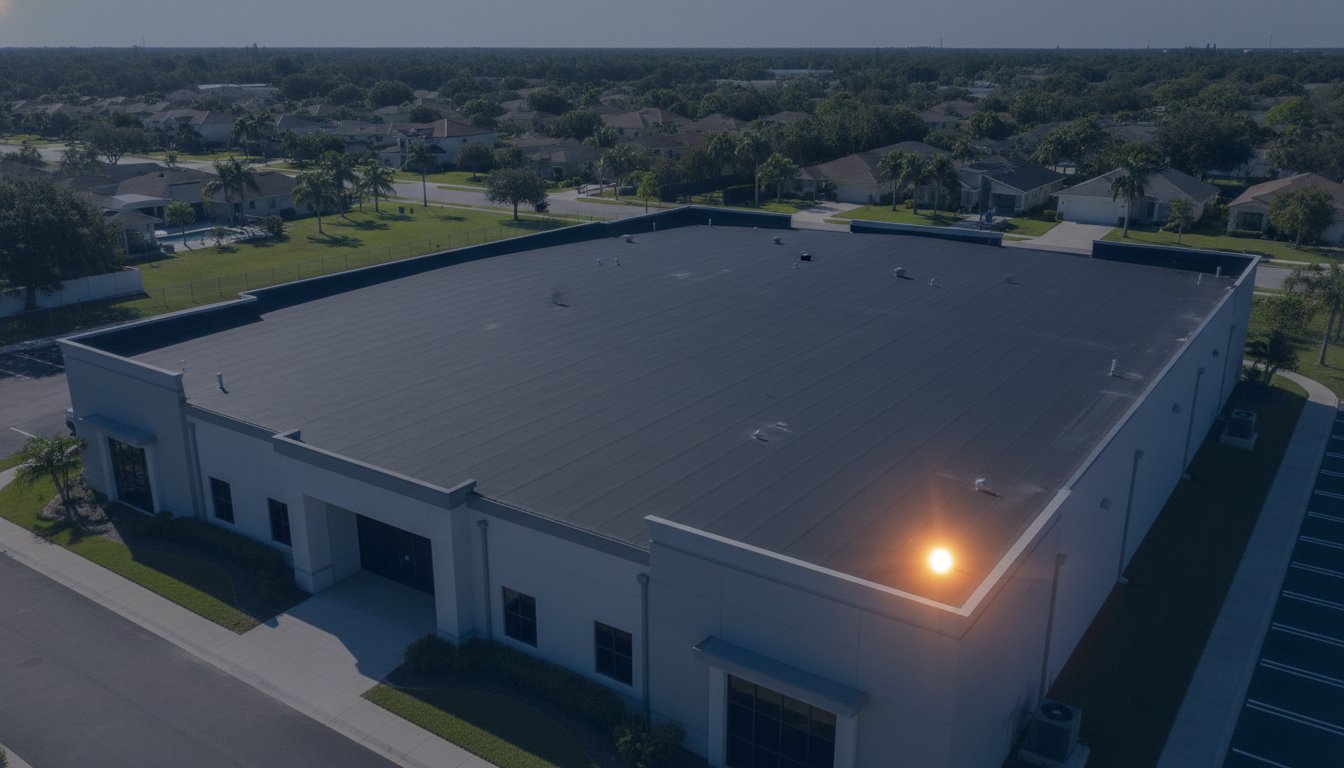
While most property owners think thin single-ply membranes are the standard, a modified bitumen roof offers four times the puncture resistance of TPO. This makes it the superior choice for Central Florida’s debris-filled storm seasons. You’ve likely felt the frustration of a recurring leak on a flat section of your home or business, or watched your energy bills climb as the intense sun bakes your structure. It’s a common struggle in our local climate where standard materials often fail under high humidity and relentless UV exposure.
We’re here to show you how a fortified modified bitumen system acts as a seamless shield, delivering a waterproof finish that can last 20 years and withstand hurricane winds over 175 mph. You’ll discover why this multi-ply approach is the most resilient solution for our unique regional challenges. This guide breaks down the $4.50 to $9.00 per square foot installation costs, explains the critical flashing updates in the 9th Edition Florida Building Code effective December 31, 2026, and provides the expert precision you need to secure your property for the long term.
Key Takeaways
- Learn why SBS membranes are the superior choice for Central Florida’s climate, offering the rubberized flexibility needed to handle extreme thermal expansion.
- Discover how a modified bitumen roof provides four times the puncture resistance of single-ply systems, creating a fortified shield against hurricane-driven debris.
- Compare the “gold standard” torch-down installation method with modern self-adhered options to achieve a seamless, watertight bond for your structure.
- Identify early warning signs like blistering and alligatoring using our seasonal maintenance checklist to ensure your investment lasts 20 years or more.
- Navigate the 2026 Florida Building Code updates and local pricing trends to ensure your new roof meets the highest standards of safety and precision.
What is Modified Bitumen Roofing? The Modern Shield for Low-Slope Roofs
A modified bitumen roof represents the high-tech evolution of the traditional asphalt surfaces that have protected American buildings for over a century. By infusing high-grade asphalt with specific polymers like rubber (SBS) or plastic (APP), manufacturers create a material that doesn’t just sit on your building; it actively resists the elements. This modification allows the membrane to expand and contract without cracking, which is vital when the Florida sun heats your roof surface to 150 degrees by noon. This multi-ply approach creates a redundant barrier, meaning even if the top layer takes a hit from a falling branch, the layers beneath keep your interior bone-dry.
In Lakeland, you’ll see these systems shielding expansive commercial warehouses, while in Winter Haven, they’re the preferred choice for residential Florida rooms and lanai additions. Because these areas often feature flat or very low-slope designs, they require a specialized level of protection that standard shingles simply cannot provide. To better understand how these layers are fused together to create a watertight bond, watch this helpful video showing the process in action:
The Evolution from Built-Up Roofing (BUR)
Traditional Built-Up Roofing, often called “tar and gravel,” served its purpose for decades but came with massive weight penalties. Modern structures in Davenport and Kissimmee aren’t always designed to support the heavy rock ballast required by those older methods. A modified bitumen roof is significantly lighter and more efficient to install, reducing the structural load on your home while offering much easier maintenance. You get the same rugged durability of old-school asphalt without the cumbersome weight or the messy gravel that often clogs gutters and downspouts during a tropical storm.
Why “Low-Slope” Requires Specialized Materials
Many homeowners try to use standard shingles on flat sections, but this is a recipe for disaster. Shingles are designed to shed water using gravity on steep pitches; they fail almost instantly on slopes less than 2:12. Central Florida’s heavy summer downpours, which can drop 3 inches of rain in an hour, often lead to “ponding water” that sits for days. Bituminous waterproofing provides a seamless, impermeable shield that handles standing water where shingles would simply rot. It acts as a specialized solution for those tricky problem zones where standard roofing just can’t compete against Florida’s humidity and rainfall.
SBS vs. APP: Choosing the Right Membrane for the Florida Sun
Selecting the right modified bitumen roof requires understanding the chemistry behind the membrane. While both SBS and APP systems provide a fortified shield, they react differently to the intense Central Florida environment. These membranes aren’t just sheets of asphalt; they’re high-performance composites reinforced with heavy-duty fiberglass or polyester mats to prevent tearing and punctures. On the surface, a layer of ceramic-coated granules provides the primary defense against UV radiation while giving the roof its finished aesthetic. Choosing between them often comes down to how your specific structure handles heat, movement, and the daily cycles of the Florida climate.
The internal skeleton of these membranes is just as vital as the bitumen itself. We typically recommend polyester reinforcement for roofs that may experience more structural movement, as it offers higher elongation. Fiberglass mats, on the other hand, provide excellent dimensional stability and fire resistance. These granules aren’t just for show. They reflect a significant portion of solar energy, which helps keep your cooling costs lower. In a state where roughly 40% of a home’s energy bill can go toward air conditioning, this reflective layer is a financial necessity rather than a luxury.
SBS (Styrene-Butadiene-Styrene) Benefits
SBS is essentially rubberized asphalt. This modification gives the material an “elastic memory,” allowing it to stretch and return to its original shape without failing. In places like Lakeland, where a 98-degree afternoon can turn into a 75-degree downpour in less than 10 minutes, this flexibility is crucial. This rapid temperature shift creates thermal shock, which causes rigid materials to crack over time. SBS absorbs that stress with ease. Its superior adhesion properties also make it an excellent choice for residential additions that require maximum wind uplift resistance during the peak of hurricane season.
APP (Atactic Polypropylene) Characteristics
APP is often referred to as plasticized bitumen. It features a much higher melting point than SBS, which makes it exceptionally tough against the Florida sun’s relentless heat. Because it flows more easily when heated, APP is the preferred choice for torch-down applications on large commercial projects in Kissimmee. While it doesn’t have the same stretch as SBS, its surface is naturally more resistant to UV degradation and foot traffic. For many business owners, the decision rests on the specific installation method and the structural design of the building. If you’re unsure which membrane fits your project, consulting with a local roofing expert can provide the clarity you need to protect your investment for the next 20 years.

Why Modified Bitumen is the Best Choice for Central Florida Properties
Central Florida property owners face a unique cocktail of environmental threats that standard roofing materials often can’t handle. A modified bitumen roof stands out because it offers a multi-ply defense system. Unlike single-ply membranes that rely on one thin layer, this system uses multiple layers of bitumen and reinforcement. This design delivers four times the puncture resistance of TPO. In Polk County, where summer storms frequently toss heavy debris and branches onto low-slope sections like lanais and Florida rooms, this extra thickness is the difference between a secure home and a costly interior leak.
Waterproofing is another area where this material excels. With Central Florida receiving over 50 inches of annual rain, your flat roof must handle immense volume without failing at the seams. Modified bitumen systems are fused together to create a monolithic, watertight barrier. If a small area does sustain damage, repairs are straightforward and effective. Unlike TPO, which requires specialized heat-welding equipment for every patch, bitumen can often be repaired with cold-applied adhesives or localized torching. This simplicity ensures your roof remains a fortified shield without requiring a full replacement for minor issues.
Fortified Protection Against Tropical Storms
When hurricane-force winds hit, the integrity of your roof’s edge and seams determines if the structure stays intact. These systems are engineered to meet the stringent 9th Edition Florida Building Code requirements, with many configurations certified to withstand winds exceeding 175 mph. The multi-layer redundancy acts as a safety net; if the top cap sheet is scuffed by wind-driven debris, the base sheets underneath continue to prevent moisture intrusion. If you’ve recently weathered a storm and worry about hidden damage, seeking expert roof repair near me can help identify these issues before the next tropical system arrives.
Heat Resistance and Energy Savings
The Florida sun is a constant drain on your finances, but the right roofing material can fight back. Modern modified bitumen cap sheets feature highly reflective granules that bounce UV rays away from your building rather than absorbing them. For business owners in Haines City and Auburndale, this “cool roof” technology significantly reduces the HVAC load on large flat-roofed structures. By keeping the roof surface cooler, you’re not just saving on monthly cooling costs; you’re also extending the life of your air conditioning units. Many insurance providers also recognize the value of these hardened roofing systems, potentially leading to lower premiums for properties that exceed standard wind and fire resistance benchmarks.
Installation Methods: Torch-Down vs. Cold-Applied
Selecting the right membrane is a vital first step, but the installation method determines how that material performs when a tropical storm hits. For a modified bitumen roof, the goal is always the same: creating a monolithic, watertight bond that prevents moisture from reaching the decking. In Central Florida, we primarily utilize three methods: torch-applied, cold-applied, and self-adhered systems. Each has specific benefits depending on whether you’re protecting a large commercial warehouse in Polk County or a residential lanai addition in Winter Haven.
The success of these methods relies heavily on the precision of the flashing. Most roof failures don’t happen in the field of the roof; they happen at the edges, walls, and pipe penetrations. The 9th Edition of the Florida Building Code, which takes effect December 31, 2026, introduces even stricter requirements for flashing to prevent moisture intrusion. Our teams ensure every termination point is fortified to meet these updated standards, providing the security you need for the next two decades.
The Torch-Down Process
Torch-down application remains the gold standard for achieving maximum seam integrity. Our Lakeland crews use propane torches to carefully melt the bitumen on the underside of the membrane as it’s unrolled, fusing it directly to the base sheet. This creates a permanent, welded bond that is nearly impossible to pull apart. It’s the ideal choice for high-traffic commercial roofs that require the highest wind-uplift ratings. Because this method involves open flames, we follow rigorous safety protocols and “fire watch” periods to ensure your property remains protected throughout the entire process.
Cold-Applied and Self-Adhered Options
For occupied residential buildings and areas where fire safety is a primary concern, cold-applied and self-adhered systems offer a safer, “no-flame” alternative. Cold-applied systems use specialized liquid adhesives to bond the layers together. While these require slightly longer curing times, they provide a thick, redundant layer of protection that’s excellent for preventing leaks. Self-adhered or “peel-and-stick” membranes are increasingly popular for smaller residential projects like Florida rooms. These systems feature a factory-applied adhesive that bonds instantly to the substrate, significantly speeding up installation time without sacrificing the durability of the modified bitumen roof.
Whether your project requires the traditional strength of a torch-down system or the safety of a self-adhered membrane, precision is the key to longevity. To ensure your property is protected by a system that meets the latest 2026 safety standards, schedule a professional installation assessment with our dedicated local team.
Protecting Your Investment: Maintenance and Local Expertise
Installing a modified bitumen roof is a major step toward securing your property, but the work doesn’t end on the final day of installation. While these systems are incredibly durable, the harsh Central Florida environment can eventually take a toll on even the most fortified structures. Proactive maintenance is the key to ensuring your roof reaches its full 20-year lifespan. By staying ahead of minor wear and tear, you prevent small issues from turning into the high-stress emergencies that often follow a major tropical storm.
You should keep a close eye out for two common signs of aging: alligatoring and blistering. Alligatoring looks like a pattern of small, interconnected cracks across the surface, resembling the skin of a reptile. This usually happens after years of relentless UV exposure dries out the bitumen. Blistering, on the other hand, appears as raised bubbles where air or moisture has become trapped between the membrane layers. If you spot these signs early, a simple repair can restore the seamless shield of your roof without requiring a full tear-off.
The Central Florida Maintenance Checklist
In Polk and Osceola counties, our weather patterns dictate a specific care schedule. We recommend a thorough walkthrough at least twice a year, ideally before and after the peak of hurricane season. Focus on these critical tasks to keep your system in top shape:
- Clear debris immediately: After a heavy summer downpour, remove leaves and branches that can clog drains and cause “ponding water” on flat sections.
- Inspect the seams: Check the fused edges of your membrane every 2 to 3 years to ensure they remain watertight and haven’t begun to lift.
- Evaluate the flashing: Pay close attention to the metal transitions around chimneys and walls, especially with the stricter 2026 flashing requirements now in effect.
For those managing larger properties, staying on top of these details is even more critical. You can learn more about specialized care for business properties in our guide to commercial roofing near me.
Why Choose Roof Top Experts for Your Modified Bitumen Project?
At Roof Top Experts, we position ourselves as the Reliable Guardian of your home or business. We aren’t just contractors; we’re your neighbors with deep roots in Winter Haven and Lakeland. Our team brings a no-nonsense approach to every project, prioritizing safety and structural integrity above all else. We understand the specific demands of the local climate because we live here too. When you choose us, you’re getting precision craftsmanship backed by a dedicated, family-owned company that values long-term relationships over quick sales. Contact us for your free expert consultation today and let us provide the peace of mind your family deserves.
Secure Your Property with a Fortified Shield
Choosing a modified bitumen roof is a strategic decision to safeguard your investment against the volatile Central Florida elements. Throughout this guide, we’ve detailed how this multi-ply system offers the puncture resistance and thermal flexibility necessary to withstand the 50 inches of annual rainfall and high-velocity winds our region faces. Since 2020, Roof Top Experts has specialized in these Florida-hardened roofing systems, providing precision craftsmanship that meets the rigorous 9th Edition Florida Building Code standards taking effect in late 2026. As a fully licensed and insured contractor with deep roots in Lakeland and Winter Haven, we possess the specialized skills required for everything from residential lanai additions to large-scale commercial flat roofs.
Protect your property with a fortified Modified Bitumen roof; get your free estimate today!
Don’t wait for the next major storm to test the integrity of your structure. Trust the local team that acts as your Reliable Guardian, offering honest guidance and results that last for 20 years or more. We’re ready to provide the steady hand and professional expertise you need to keep your home or business safe.
Frequently Asked Questions
How long does a modified bitumen roof last in Florida?
A modified bitumen roof in Central Florida typically lasts between 15 and 20 years. The intense UV exposure and high humidity levels in our region can accelerate wear, but regular maintenance often helps properties reach the upper end of that range. Systems utilizing reflective cap sheets tend to last longer by reducing the thermal degradation caused by the sun.
Is modified bitumen better than TPO for flat roofs?
Modified bitumen is often the superior choice for property owners who prioritize durability and puncture resistance. While TPO is a popular lightweight option, mod-bit systems offer approximately four times the resistance to debris impact. This extra strength is a vital advantage in Polk County, where summer storms frequently toss branches and debris onto low-slope roof sections.
Can you walk on a modified bitumen roof?
Yes, you can walk on these roofs for routine maintenance and inspections. The multi-ply construction and granular surface provide a rugged area that handles foot traffic much better than thinner single-ply membranes. It’s best to avoid walking on the surface during the hottest part of a 95-degree afternoon when the asphalt is at its softest point.
How much does modified bitumen roofing cost per square in Polk County?
The installed cost for a modified bitumen roof in Polk County currently ranges from $4.50 to $9.00 per square foot. This translates to roughly $450 to $900 per square, which is a standard 100-square-foot roofing measurement. For a typical 2,000-square-foot flat roof, you can expect total project costs to fall between $7,000 and $16,000, plus permit fees that usually range from $300 to $800.
Is modified bitumen roofing fire-resistant?
Modified bitumen systems are highly fire-resistant when they are installed with a UL-rated cap sheet. Many of these configurations achieve a Class A fire rating, providing the highest level of protection against external fire spread. This is a critical safety feature for commercial buildings in Lakeland and Kissimmee where structures are often built in close proximity.
Can modified bitumen be installed over an existing roof?
The 9th Edition of the Florida Building Code, which takes effect on December 31, 2026, provides specific regulations for reroofing. While it’s sometimes possible to install over one existing layer, the code requires a complete tear-off if the roof already has two or more layers. We always perform a detailed inspection of the underlying deck to ensure the new system has a stable, dry foundation.
What causes a modified bitumen roof to blister in the sun?
Blisters are typically the result of moisture or air trapped between the layers of the membrane during the installation process. When the intense Florida sun heats the roof surface, this trapped moisture expands and creates a bubble or “blister.” Precision during installation and ensuring all materials are bone-dry before they’re fused together is the only way to prevent this structural weakness.
How do I find a qualified modified bitumen contractor in Lakeland, FL?
You should look for a local, family-owned contractor who is fully licensed and insured to work in the State of Florida. Ensure they have a proven track record with “Florida-hardened” roofing systems and can provide specific wind-uplift certifications. A reliable expert will offer a transparent, no-nonsense assessment of your project and prioritize the long-term structural integrity of your home or business.


Leave a Reply