
Did you know that 100% of new homes permitted under the 2026 Florida Building Code updates must utilize specific secondary water barriers to maintain standard insurance eligibility? It’s natural to feel a sense of urgency when planning your new construction roofing installation, especially when the safety of your family and the long-term integrity of your investment are on the line. You’ve likely spent months perfecting your floor plan, and the last thing you need is a compliance delay or a roof that can’t handle a 130 mph wind gust during the peak of hurricane season.
We’re here to ensure your build stays on track and your home stays dry. This guide will help you master the technical complexities of modern Florida roofing, from navigating the latest safety regulations to choosing materials that thrive in our unique humidity. We’ll walk you through the multi-stage installation timeline and show you how to select a fortified system that provides lasting peace of mind for the next thirty years. You’ll gain the confidence to make informed decisions that protect your home from the intense Central Florida sun.
Key Takeaways
- Learn how the 2026 Florida Building Code dictates your material choices and attachment methods to ensure your new build is fully compliant and storm-ready.
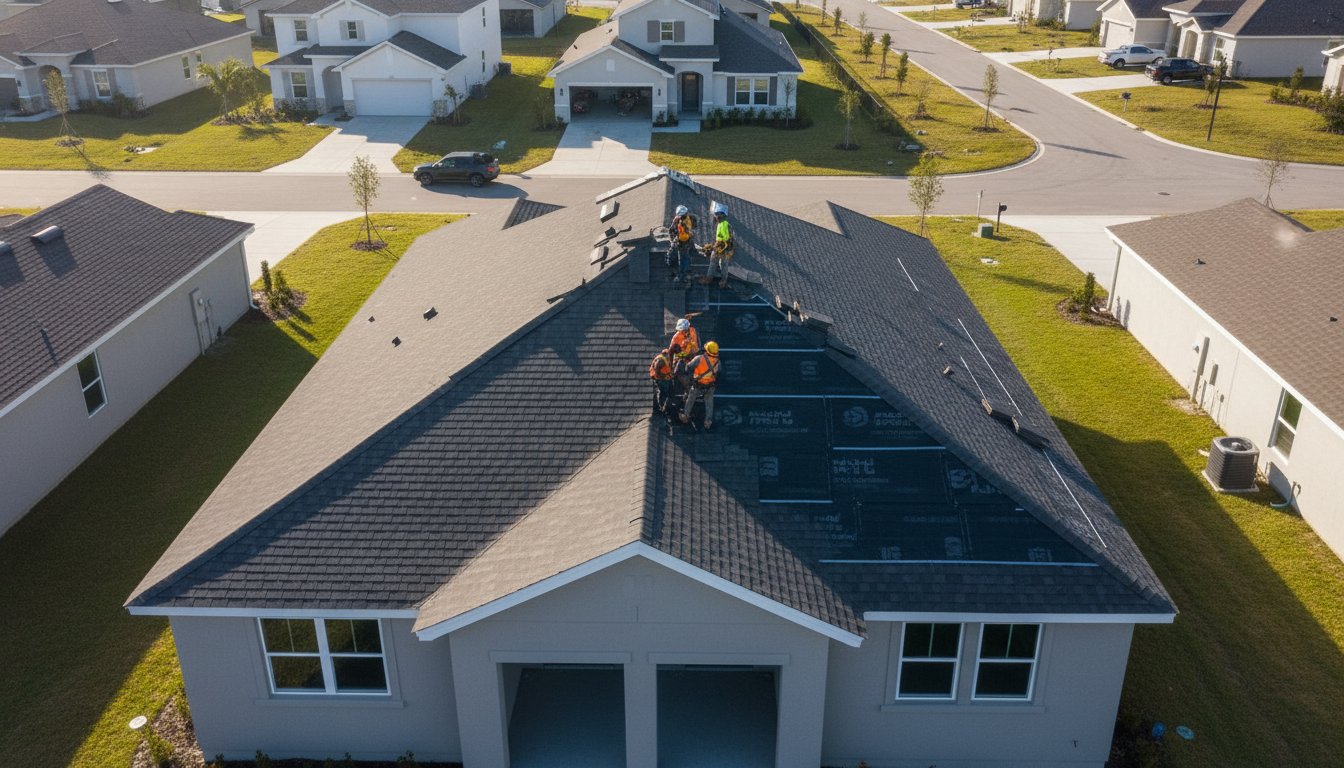
- Discover the critical “dry-in” phase of the installation process that safeguards your home’s interior from unpredictable weather during the construction timeline.
- Compare the long-term durability and cost-efficiency of metal versus asphalt shingles to choose the best new construction roofing installation for the intense Central Florida sun.
- Understand the essential “in-progress” inspections required by local law to guarantee every nail and seal exceeds the highest safety standards.
- Find out why partnering with local, family-owned experts provides a level of precision and long-term protection that national chains cannot match.
Planning Your New Construction Roofing Installation in Central Florida
Building a home in Central Florida requires more than just aesthetic choices; it demands a structural shield against extreme elements. A professional new construction roofing installation officially starts once the framing is complete and the roof deck is firmly installed. This phase represents the transition from a skeletal frame to a secure, weather-tight structure. In 2026, every project must strictly adhere to the updated Florida Building Code, which dictates specific attachment methods and material ratings designed to withstand our unique environment. Understanding the basic elements of roof construction is vital for homeowners before the first shingle is nailed down.
To better understand how these components come together on a job site, watch this helpful video:
Precision at this stage is non-negotiable. Our Reliable Guardian approach emphasizes that pre-planning prevents 90% of future leak issues. By calculating specific wind-uplift requirements for residential roofing services in Winter Haven and Lakeland, we ensure your roof stays attached during a tropical event. These calculations consider the home’s height, location, and surrounding terrain to determine exactly how many fasteners are required per square foot. We don’t just guess at safety; we engineer it into the foundation of your home’s defense.
Navigating Permits in Polk and Osceola Counties
Permitting requirements vary significantly between municipalities like Lakeland and Winter Haven. In Polk County, the 2026 standards require detailed wind load reports and product approval sheets before any work begins. Your roofing contractor must coordinate closely with the general builder to align inspection windows. This ensures the dry-in phase passes local codes before the final covering is applied. This seamless coordination prevents costly delays and ensures the structural integrity of the build remains intact through every official check-off.
Selecting a Hurricane-Resistant Design
Design choices made during the drafting phase directly impact how a roof handles Central Florida’s high humidity and intense UV exposure. The pitch and shape of the roof are critical. Hip roofs typically offer better wind resistance than gable designs during 130 mph gusts. You should select your primary material, such as tile, metal, or asphalt shingle, during the initial design phase. This allows engineers to account for the specific weight of the material when finalizing the new construction roofing installation plan, ensuring the trusses can support the load for the next 30 to 50 years.
The 6-Step Installation Process for a Fortified Florida Roof
Building a home in Central Florida involves a race against the clock and the climate. A successful new construction roofing installation requires precise timing to ensure the structure remains protected from the moment the trusses are set. Our process focuses on creating a multi-layered shield that stands up to the 115 days of rain we see annually in the Orlando area. We prioritize the dry-in phase, which allows interior trades like electrical and drywall to begin their work safely while we finalize the exterior armor.
Step 1-3: Decking Prep to Underlayment
The foundation of a reliable roof starts with the wooden deck. We inspect every sheet of plywood or OSB for gaps exceeding 1/8 inch, ensuring a stable surface for material adhesion. Following the Florida Building Code roofing definitions, we install a self-adhering secondary water barrier directly to the deck. This “peel-and-stick” layer is a critical defense mechanism; if the primary shingles are ever stripped away by high winds, this barrier keeps the house watertight. It also qualifies most homeowners for significant wind mitigation discounts on their insurance premiums. We finish this phase by installing heavy-gauge drip edges along the eaves to direct water away from the fascia, preventing the wood rot so common in our humid environment.
Step 4-6: Shingling to Final Inspection
Once the house is dried-in, we move to the precision application of your chosen material. For a new construction roofing installation, we utilize reinforced six-nail patterns rather than the standard four-nail approach. This provides the uplift resistance necessary for 150 mph wind zones. We pay special attention to “dead valleys” and roof-to-wall intersections, where we integrate specialized step flashing to handle Central Florida’s intense summer downpours. These areas are the most common failure points in builder-grade roofs, so we seal them with industrial-grade solar-resistant mastics.
- Ventilation: We install high-profile ridge vents to exhaust hot attic air, which can reach 160 degrees in July, reducing your cooling costs by up to 15%.
- Penetrations: Every plumbing boot and exhaust vent receives a double-seal treatment to ensure a seamless shield against moisture.
- Final Walkthrough: A dedicated supervisor conducts a 25-point inspection to ensure the craftsmanship meets our “Expert” standard before we consider the job complete.
Our team treats every new build as if it were sheltering our own families. If you are currently planning a project, you can view our recent local projects to see how we balance durability with neighborhood aesthetics. We provide a steady hand throughout the construction timeline, ensuring your roof is the strongest part of your new home.

Selecting Materials: Shingle, Metal, or Tile for New Homes?
Central Florida’s UV index frequently hits levels of 10 or higher for more than 250 days a year. This relentless solar bombardment degrades roofing materials significantly faster than in northern climates. Choosing the right material for your new construction roofing installation dictates your home’s structural integrity for the next three decades. Many homeowners fall for the myth that the lowest upfront bid is the most affordable. A budget shingle might save a few thousand dollars today but often requires full replacement in 12 years. In contrast, a premium system can last 50 years. This reality makes the cheapest material the most expensive choice over a 10-year period when you factor in repair costs and rising insurance premiums.
- Asphalt Shingles: 15 to 22 years average lifespan in Florida.
- Metal Roofing: 40 to 70 years average lifespan.
- Concrete or Clay Tile: 50+ years average lifespan.
Asphalt Shingles: The Modern Standard
By 2026, shingle technology has advanced to include specialized polymers that resist limestone-eating algae and withstand wind gusts up to 130 mph. These architectural shingles are the preferred choice for roof replacement in Lakeland because they offer a perfect balance of aesthetic appeal and fortified protection. When selecting your colors, prioritize “cool” tones like silver, tan, or light grey. These shades reflect up to 30% more solar radiation than dark charcoal. This thermal reflection directly lowers your attic temperature and reduces your cooling costs during the peak of the July heat.
Metal and Tile: The Premium Shields
Standing seam metal roofs represent the gold standard for hurricane-prone areas. Unlike exposed fastener systems, standing seam hides the screws under a locking mechanism, which eliminates thousands of potential leak points. When evaluating a metal roof vs asphalt shingles for a new build, the long-term ROI favors metal due to its durability and energy efficiency. For luxury new construction roofing installation projects in Kissimmee and Davenport, tile remains the premier choice for its Mediterranean aesthetic and fire resistance.
Tile is exceptionally heavy, often weighing between 800 and 1,000 pounds per square. Your new construction framing must be specifically engineered to handle this load. We suggest verifying your builder’s credentials through Florida’s Association of Roofing Professionals to ensure they follow the most recent high-wind attachment protocols. Over a 30-year period, these premium materials require about 40% fewer maintenance interventions than standard shingles, providing a seamless and reliable shield for your family home.
Navigating Florida Building Codes and Post-Installation Inspections
Florida building codes are among the most rigorous in the nation for a reason. For any new construction roofing installation in Central Florida, compliance is the legal foundation of your home’s safety. Local building departments mandate “in-progress” inspections to verify the integrity of the secondary water barrier and flashing before the final shingles or metal panels cover them up. We treat these state requirements as the bare minimum. Our crews install every fastener and seal to exceed the 2026 Florida Building Code, ensuring your structure stands firm against the intense humidity and storm surges common to our region.
The roof plays a critical role in obtaining your Certificate of Occupancy. If a building inspector identifies a single deviation from the approved engineering plans, your move-in date will be delayed. This is why even an affordable roofing company near me must prioritize precision over a fast completion time. Cutting corners to save a few hours on labor often leads to failed inspections and expensive structural corrections that ripple through your entire construction schedule.
Understanding Wind-Uplift Ratings
A 150mph wind rating means your roof is engineered to withstand the extreme uplift pressures of a Category 4 hurricane. This rating depends entirely on the precision of the nailing pattern. During your new construction roofing installation, we use a reinforced six-nail pattern for shingles or specialized mechanical clips for metal to lock the system to the deck. Our team documents every stage with high-resolution photos. This digital paper trail provides your insurance agent with the proof needed to secure maximum wind mitigation discounts on your 2026 homeowner’s policy.
Post-Installation Warranties and Protection
Your protection comes from two distinct sources. A manufacturer warranty covers material defects, while our local workmanship guarantee covers the actual installation process. In 2026, most major manufacturers require digital registration within 60 days of installation to activate full coverage. We manage this registration for you to ensure no deadlines are missed. To keep these protections valid, we recommend scheduling your first annual maintenance check 12 months after move-in. This proactive step identifies minor wear from UV exposure before it becomes a structural threat.
Ready to ensure your new build meets the highest safety standards? Contact Florida Rooftop Experts to schedule your code-compliant roof consultation.
Partnering with Local Experts for Your New Build’s Protection
Choosing the right partner for your new construction roofing installation determines the long-term health and safety of your home. National chains often operate with a one-size-fits-all mentality that fails to account for the volatile weather patterns unique to the Sunshine State. When you search for local roofing companies near me, you aren’t just looking for a contractor. You’re looking for a neighbor who understands why a house in Winter Haven faces different moisture challenges than one in Lakeland. Roof Top Experts bridges the gap between family-owned values and industrial-grade precision. We treat every project as if we’re sheltering our own family, ensuring that the structural integrity of your new build is never compromised by corner-cutting or subpar materials.
Our team coordinates seamlessly with Central Florida’s top home builders to maintain strict project timelines. We understand that a delay in the roofing phase ripples through the entire construction schedule, holding up interior work like drywall and flooring. By maintaining open lines of communication and showing up exactly when scheduled, we provide a fortified shield for your home without slowing down the progress of other trades. This reliable approach has made us the Expert choice for residential builds across the region.
The Value of Regional Specialization
Our deep roots in Polk, Hillsborough, and Osceola counties provide us with a distinct advantage. We’ve spent years studying the micro-climates of these areas, from the intense heat pockets of urban Orlando to the high-humidity zones near our local lakes. This knowledge informs every material recommendation we make. For example, we know that the 2026 Florida sun can degrade standard asphalt shingles 15 percent faster than in cooler climates, so we prioritize UV-resistant technology. We engineer every roof to meet or exceed the 130+ mph wind speed requirements established by Florida’s rigorous building codes. Our commitment to Florida-specific engineering standards ensures that your investment remains secure against the most punishing tropical weather systems.
Start Your Project with a Free Consultation
Planning your new construction roofing installation shouldn’t be a guessing game. Our free consultation process removes the stress of the unknown by providing a clear, detailed roadmap for your project. We utilize advanced digital modeling software to provide accurate material counts and precise timelines, which helps prevent the 10 percent waste margin common in traditional estimation methods. This technology allows us to show you exactly how different materials will look on your specific architectural design before a single nail is driven. You’ll receive a comprehensive estimate that breaks down every cost, from underlayment to ridge vents, with total transparency. Contact Roof Top Experts today to secure your new home’s future with a roof built for longevity and peace of mind.
Build Your Central Florida Home on a Foundation of Strength
Your new home deserves a shield that stands up to the 150 mph wind-speed requirements often found in the Florida Building Code’s High Velocity Hurricane Zones. Selecting the right materials, whether it’s 30-year architectural shingles or high-performance metal panels, is the first step in ensuring your family’s long-term safety. Our 6-step installation process focuses on fortified techniques that exceed standard local inspections and provide lasting peace of mind. A successful new construction roofing installation requires more than just labor; it demands a deep understanding of Central Florida’s intense UV exposure and seasonal storm patterns. As a fully licensed Florida contractor and a local Winter Haven family-owned business, we bring decades of regional mastery to every project. We specialize in HVHZ wind-uplift standards to give you a roof that acts as a permanent guardian against the elements. You’ve worked hard to design your dream home. It’s time to ensure it remains secure for decades to come.
Secure Your New Build with a Free Roofing Estimate from Roof Top Experts
We look forward to helping you protect what matters most with precision and care.
Frequently Asked Questions
How long does a new construction roofing installation take in Florida?
A standard new construction roofing installation in Florida typically takes between 2 and 5 days to complete once the roof deck is ready for dry-in. Factors like 90% humidity or summer afternoon storms can shift the timeline slightly. For a 2,500 square foot home, our experts usually complete the initial synthetic underlayment within 24 hours to protect the wooden structure from sudden Central Florida downpours.
Can I change my roofing material after the house framing is finished?
You can change your material after framing, but it often requires a structural engineer’s approval to verify the trusses can handle the weight. If you switch from asphalt shingles to heavy concrete tiles, the roof must support an additional 800 pounds per square. You’ll also need to update your permit with the local building department to ensure the new construction roofing installation stays compliant with safety standards.
What is the best roof for a new house in Central Florida to lower insurance?
Metal roofing or impact-rated shingles provide the highest insurance discounts under current Florida building standards. According to the Florida Department of Financial Services, homes with secondary water barriers and hurricane straps can see premium reductions of 20% or more. These fortified systems provide a seamless shield against 150 mph winds, offering the precision and security your family needs during the Atlantic hurricane season.
Is a permit required for roofing on a new construction home in Polk County?
Polk County Building Division requires a specific roofing permit for every new residential structure before work begins. This permit ensures that the installation follows the 2023 Florida Building Code, 8th Edition, which governs wind load requirements for our specific region. Our team handles the filing process to ensure your project stays on schedule and meets every local safety mandate without any unnecessary delays.
How much does a new construction roof cost compared to a replacement?
A new construction roofing installation generally costs less than a replacement because there’s no existing material to tear off and dispose of. Industry data from the 2024 State of the Industry report suggests that labor savings can reach 15% when working on a clean, open deck. You also avoid the fees associated with hauling away old debris, making the initial build more efficient for your project budget.
Do I need to be on-site during the roofing installation process?
You don’t need to be present while our experts work on your roof. We maintain a transparent process and provide regular updates through digital photos and progress reports. Since this is an active construction site, staying clear of the perimeter keeps you safe from falling materials or heavy equipment while our crew focuses on the precision of the build and your home’s integrity.
What happens if it rains during my new roof installation?
Our crews monitor local Doppler radar every 30 minutes to anticipate Central Florida’s volatile weather patterns. If rain approaches, we immediately secure the site using synthetic underlayment and temporary seals to keep the interior dry. We never leave a roof exposed; we prioritize the protection of your home by ensuring every section is dried-in before the first drop of rain hits the deck.
How do I know if my new roof meets the 2026 Florida Building Code?
Your roof meets the 2026 standards if it passes the mandatory mid-phase and final inspections conducted by county officials. These inspections verify that the fastening patterns and underlayment meet the latest wind-uplift requirements for the 140 mph zones found in Central Florida. We provide a final certificate of completion that serves as your proof of code compliance and long-term structural integrity.


Leave a Reply